Food Allergies: Causes, Symptoms, and How to Manage Them
If you or someone you love has a food allergy, you’re not alone—about 33 million…
Read More




 [August 19, 2025]
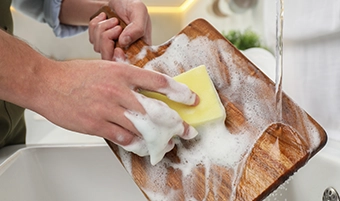





Still using just soap and water to clean your wooden cutting board? You could be leaving behind harmful bacteria right where you prepare your food.
Did you know? According to a study published in December 2024, ‘Comparison of various types of cutting boards in bacterial contamination,’ 36.23% of wooden cutting board surfaces still had bacteria on them after a basic wash, especially following contact with raw meat. The good news? With the right habits and care, wooden cutting boards can remain both sanitary and long-lasting. This guide will walk you through everything you need to know about how to properly clean, disinfect, and protect your cutting board for years to come.

Wood adds warmth and charm to any kitchen. Many home cooks prefer it because it’s gentler on knives than plastic or glass. But wood has an important trait: it’s porous. That means liquids, food bits, and bacteria can seep deep into the surface, making thorough cleaning absolutely essential.
A December 2024 study titled “Comparison of Various Types of Cutting Boards in Bacterial Contamination” revealed a sobering statistic: 36.23% of wooden boards tested after cutting meat still showed signs of contamination – even after being washed. That means if you’re using a wooden board and not disinfecting it properly, you might be inviting germs to stick around for your next meal.
“Unlike stainless steel or glass, wood offers germs a cozy place to hide.”
To put it in perspective, wood retained over a third of bacteria after washing, while plastic held onto nearly 20%, and glass just 4.5%. That gap matters because it means pathogens from raw chicken could survive long enough on a wooden board to transfer to your next salad, increasing the risk of foodborne illness.
While wood isn’t inherently unsafe, it does require a more intentional approach to cleaning. Think of it like cast iron – wonderful when cared for correctly, but easy to misuse.
If your idea of cleaning is a quick rinse under the faucet, it might be time to step up your game. Wooden cutting boards need more than a splash of water to stay truly sanitary.
Use this method every time you prep food:
Tip: Avoid soaking your board or putting it in the dishwasher, both can cause warping, splitting, and long-term damage. When washing, regular dish soap is fine, but skip harsh degreasers or antibacterial soaps containing triclosan, as they can damage the wood and leave unwanted residues.
This routine might sound simple, but doing it consistently is key. It prevents stains, odors, and – most importantly – bacterial growth.
If your cutting board looks dull or smells off, it’s time for a deep clean. Even if it doesn’t, aim to do one weekly to keep bacteria and odors in check. For stubborn stains, odors, or after prepping juicy meats or fruits, a more thorough cleansing is essential.
You can use a variety of natural solutions to break down residue and refresh your board. For example, coarse salt and lemon can be used as a natural scrub. Sprinkle the salt generously over the board, scrub it with half a lemon, and let it sit before rinsing. Alternatively, baking soda is a gentle yet effective option. Just sprinkle it on, scrub with a soft brush, and rinse thoroughly.
Lemon helps lift odors and grease, while coarse salt acts as a gentle scrub. These natural solutions are perfect for weekly resets or after prepping smelly or juicy foods.
After handling raw meat, cleaning with soap and water isn’t enough. To kill bacteria that may linger, a proper disinfectant is essential.
Here are two reliable ways to disinfect your cutting board:
Tip:Wear gloves when using bleach. It can irritate your skin, eyes, and even your airways with prolonged exposure.
Natural options like lemon and vinegar can be helpful for regular upkeep, but keep in mind, they’re not as strong as bleach when it comes to killing tougher germs.
Tip: Always let the board dry thoroughly before storing – moisture makes it easy for germs to come back.
Use a dedicated cleaning brush just for your cutting boards. This helps avoid cross-contamination from other surfaces like pots or sinks. And don’t forget: anytime you prep raw meat, a proper disinfecting routine is non-negotiable.
A little upkeep goes a long way. If you want your cutting board to last for years and stay safe for food prep, routine maintenance is essential.
Wood can dry out from repeated washing, which leads to cracks, and cracks can trap bacteria. To prevent this:
Tip: Regular conditioning creates a protective barrier that helps repel both water and germs.
This not only keeps your board hydrated, but also protects it from future moisture damage and bacterial buildup.
Smoothing the Surface
Over time, knife marks can develop into small grooves that collect grime and bacteria.
If your board starts to feel rough or look uneven, that’s your cue for a little TLC.
Nothing lasts forever, not even your favorite cutting board. While regular cleaning and maintenance can extend its life, there comes a point when it’s just not safe to use.
Signs It’s Time to Retire Your Board
You should retire your cutting board if you are noticing any of these signs:
How Often to Replace
You should replace your chopping board after a definite time-period:
It might feel hard to part with your old favorite, but replacing a compromised board is one of the easiest ways to improve your kitchen hygiene. And if you’re unsure – err on the side of safety. You can always repurpose the old board for non-food uses like plant stands, craft projects, or DIY tasks.
Tip: Keep separate boards for meat and produce to extend their lifespan and reduce the risk of cross-contamination.
You can also invest in color-coded cutting boards or etched labels so everyone in your household knows which one is for what type of food.
Taking care of your wooden cutting board doesn’t have to be complicated, but it does take consistency. With just a few mindful steps – regular cleaning, proper sanitizing after meat, monthly oiling, and knowing when to say goodbye – you’ll not only extend the life of your board, but also help protect everyone in your home from avoidable foodborne illness.
A well-maintained cutting board can be one of the most reliable and trusted tools in your kitchen. It just takes a little love.
If you’ve never conditioned your board before, try adding it to your monthly kitchen to-do list. Treat your board like you would your favorite cast-iron skillet – give it care, and it’ll last for years.
Start caring for your wooden cutting board today. Use some food-grade mineral oil and condition it monthly for a safer, longer-lasting kitchen tool and must retire it after a few years.
Use either a diluted bleach solution (1 tbsp bleach to 1 gallon of water) or white vinegar. Let it sit for a few minutes, rinse thoroughly, and dry.
Even for vegetables, it’s a good idea to disinfect weekly – especially if you use the board daily. Vinegar or lemon scrubs work well for this.
Improper cleaning can leave behind bacteria – especially after preparing raw meat – which raises the risk of foodborne illness.
Stay safe, stay clean – and let your cutting board keep working hard for you.

If you or someone you love has a food allergy, you’re not alone—about 33 million…
Read More

The World Health Organization sounded the alarm in October 2024: more than 200 diseases –…
Read More

Surprisingly, the USDA FSIS recently found that two out of three people use food thermometers…
Read More
Stay informed with the latest food safety guidelines, industry updates, and expert tips to keep your workplace compliant and safe.
If you or someone you love has a food allergy, you’re not alone—about 33 million…
Read More
The World Health Organization sounded the alarm in October 2024: more than 200 diseases –…
Read More
Surprisingly, the USDA FSIS recently found that two out of three people use food thermometers…
Read More
Industry-leading food safety certifications that work nationwide. Start today, download your certificate instantly.